
Followers
Popular Posts
-
offee is the favourite daily beverage of many people throughout the world and a lot of them cannot start their normally without it. They a...
-
Despite all the jokes about how men’s health is adversely affected by marriage, having a companion has a positive impact on men’s he...
-
The rise in divorce rates has brought many social problems to the lives of people affected, especially the child (who has no say in it ...
-
If you have COPD, the most important step you can take to manage your condition is to quit smoking. Your second most important step i...
India among the most Depressed Nations 0
3:15 AM A recently concluded study organised by World Health Organisation has tipped India as one of the most depressed nations in the world. This study is based on WHOs’ World Mental Health Survey Initiative and has looked at developing and developed economies. It intended to look at the rate at which individuals from participating countries are falling into the trap of depression and its related disorders due to modern day pressures.
The study which interviewed over 90000 individuals from 18 countries has found that the rate of lifetime incidents of major depressive episodes is highest in India sitting at 35.9%. China ranks the lowest in this category with 12 percent. The basis of the study was the average income of individuals from the 18 countries. The countries that were part of the survey included, China, India, USA, Japan, Brazil, Mexico, Spain and South Africa.
For the study the sample was put through WHOs’ composite international diagnostic interview wherein they had to answer a questionnaire. The questionnaire was designed to look at the attitude of people for the telling signs of major depressive episode such as loss of appetite and concentration, increased period of disinterest and the continual feeling of being discouraged.
Major depression is a result of the lifestyle that people are subjected to. The constant feeling of being part of a rat race saps the energy and enthusiasm out of them. Depression can be triggered by day-to-day problems such as relationship stress and work related hassles. Interestingly, depression affects the higher income group more.
Depression afflicts nearly 121 million people worldwide and women are more prone to it. It is also a major hurdle in the lifespan of people aged 18 – 44. Moreover people suffering from MDE are prone to prolonged periods of complete social withdrawal and even planned suicide.
Experts are of the opinion that rising income levels in India and the anxieties that it brings with it are the major factors leading to major depressive episodes. Individuals are constantly reeling under the preconceived threat of losing all that they have acquired; be it their loved ones or their career. Indians are slowly getting acclimatised to uniquely western concepts such as the nuclear family. With no support system to fall back on and social networking sites alarming cutting off individuals from real life interactions, depression is a malaise that is slowly crippling the psyche of a number of modern day Indians.
According to WHO, depression is the fourth leading cause of disability in the world. However, that statistic is all set to change as according to them, depression if not checked in time will eventually catapult to being the second leading cause of disability by 2020.
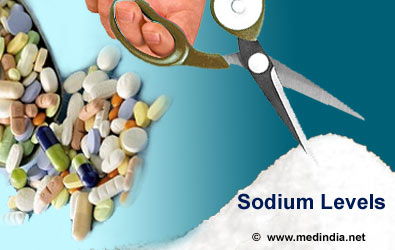
The body maintains a careful balance of electrolytes like sodium, potassium and chloride within the cells as well as in fluid outside the cells like blood and body fluids. Sodium is necessary to carry out some important functions like maintaining blood pressure. It also helps to maintain the function of nerves and muscles. Sodium enters the body through food and fluid intake. The common salt or table salt contains sodium chloride and it is used not only for cooking but also in preservatives. The same sodium chloride also is the reason for the salinity of our oceans. Excess sodium is excreted by the kidneys via the urine. Sodium levels in the plasma are normally maintained at a level of between 135 to 145 mmol/L.
The condition in which plasma level of sodium falls to below 135 mmol/L is called hyponatremia. Hyponatremia causes movement of excess water in the cells, causing them to swell. The cells of the brain in particular are unable to cope up with this swelling since they are confined within the bones of the skull. Thus, many of the symptoms caused by hyponatremia, especially severe cases, are related to the brain.
When taking medication we must remember that some of the drugs cause hyponatremia as a side effect. Many among these bring about this effect by resulting in a condition called SIADH or Syndrome of Inappropriate Secretion of ADH. ADH (antidiuretic hormone) or vasopressin is a hormone secreted by a small gland near the brain called the pituitary. It plays an important role in water absorption from the kidneys and stimulates thirst. Thus, in conditions of dehydration, by increasing water absorption from the urine and stimulating thirst, it helps to maintain the water content of the body.
SIADH is a condition where the control of ADH secretion is lost and it is secreted independent of the need to conserve water. This results in water retention and subsequent dilution of sodium levels, leading to hyponatremia.
Symptoms of hyponatremia may be mild like:
Nausea, vomiting, headache, and muscle cramps, or Symptoms may be serious like alteration in mental status including confusion, seizures and coma.
If hyponatremia is diagnosed, a careful history should be taken from the patients or their caregivers to find out if the patients are taking any medications that could result in hyponatremia. Stopping the medication usually helps to solve the problem.
medindia.net
 Jon Kim Andrus, deputy director of the Pan American Health Organization, said that as of December, on top of the deaths, the Haitian government had reported more than 520,000 cholera cases with 200 new sufferers appearing each day.
 Andrus said it was "one of the largest cholera outbreaks in modern history to affect a single country."
There are also 21,000 cases in the neighboring Dominican Republic where there have been 363 deaths, Andrus said at a briefing for the second anniversary of the January 12, 2010 earthquake which killed more than 225,000 people.
The cholera outbreak erupted in October, 2010 and has been widely blamed on a camp of UN peacekeepers from Nepal. Lawyers representing victims have demanded the United Nations pay hundreds of millions of dollars in compensation.
Andrus said Haiti needed a huge campaign to improve its supply of drinking water which various international institutions had estimated could cost between $746 million and $1.1 billion.
The international community has already given impoverished Haiti $2.4 billion in humanitarian aid in response to the quake.
Rebeca Grynspan, a UN under-secretary general at the UN Development Programme, said about 50 percent of the quake debris had been cleared -- some five million cubic meters of concrete and tangled steel.
Source-AFP
Proton therapy, a type of external beam radiation therapy, has been found safe and effective for treating prostate cancer, according to two new studies published in the January issue of the International Journal of Radiation Oncology•Biology•Physics (Red Journal), the American Society for Radiation Oncology's (ASTRO) official scientific journal.

In the first study, researchers at the University of Florida in Jacksonville, Fla., prospectively studied 211 men with low-, intermediate-, and high-risk prostate cancer. The men were treated with proton therapy, a specialized type of external beam radiation therapy that uses protons instead of X-rays. After a two year follow-up, the research team led by Nancy Mendenhall, MD, of the University of Florida Proton Therapy Institute, reported that the treatment was effective and that the gastrointestinal and genitourinary side effects were generally minimal.
"This study is important because it will help set normal tissue guidelines in future trials," Dr. Mendenhall, said.
In the second study, researchers from Massachusetts General Hospital in Boston, Loma Linda University Medical Center in Loma Linda, Calif., and the Radiation Therapy Oncology Group in Philadelphia performed a case-matched analysis comparing high-dose external beam radiation therapy using a combination of photons (X-rays) and protons with brachytherapy (radioactive seed implants).
Over three years, 196 patients received the external beam treatments. Their data was compared to 203 men of similar stages who received brachytherapy over the same time period. Researchers then compared the biochemical failure rates (a statistical measure of whether the cancer relapses) and determined that men who received the proton/photon therapy had the same rate of recurrence as the men who received brachytherapy.
"For men with prostate cancer, brachytherapy and external beam radiation therapy using photons and protons are both highly effective treatments with similar relapse rates," John J. Coen, MD, a radiation oncologist at Massachusetts General Hospital in Boston, said. "Based on this data, it is our belief that men with prostate cancer can reasonably choose either treatment for localized prostate cancer based on their own concerns about quality of life without fearing they are compromising their chance for a cure."


Categories
brain
(2)
cancer
(3)
Children's health
(3)
dental health
(3)
Diabetes
(4)
Hair
(1)
health and beauty
(7)
Marital relationship
(9)
Medical News
(4)
Medical research
(4)
Men's health
(5)
Mental health
(6)
Mesothelioma
(2)
nutrition
(5)
pregnancy
(3)
Public health
(8)
regime
(5)
Respiratory
(2)
Sexual health
(2)
Stress and Anxiety
(3)
system nervous
(2)
The nervous system
(4)
Treatment
(6)
vision
(2)
women's health
(7)


.


all about info medicine health and beaty
 2008 - 2009 SimplexDesign. Content in